




THE 4 C'S
A Framework for Understanding Your Diamond - and Its Story
Cut. Color. Clarity. Carat. These aren’t just technical details - they’re the foundation of every GRWN diamond.
Carat - The Weight of Intention
Carat is the unit used to measure a diamond’s physical weight - a precise and objective detail in the world of fine jewelry.
One carat equals 200 milligrams, or 1/5 of a gram. Each carat is further divided into 100 points, allowing for ultra-fine accuracy down to the hundredth decimal. Most GRWN diamonds range between 0.25 to 5 carats, with every size thoughtfully selected for proportion, presence, and purpose.
While other aspects of a diamond - like cut and color - involve nuance and artistry, carat weight is absolute. It’s one of the most straightforward indicators of a diamond’s value, yet how that weight is experienced depends entirely on design.
Carat vs. Size - More Than Meets the Eye
Carat measures weight - not visual size. And while that might seem straightforward, the reality is more nuanced.
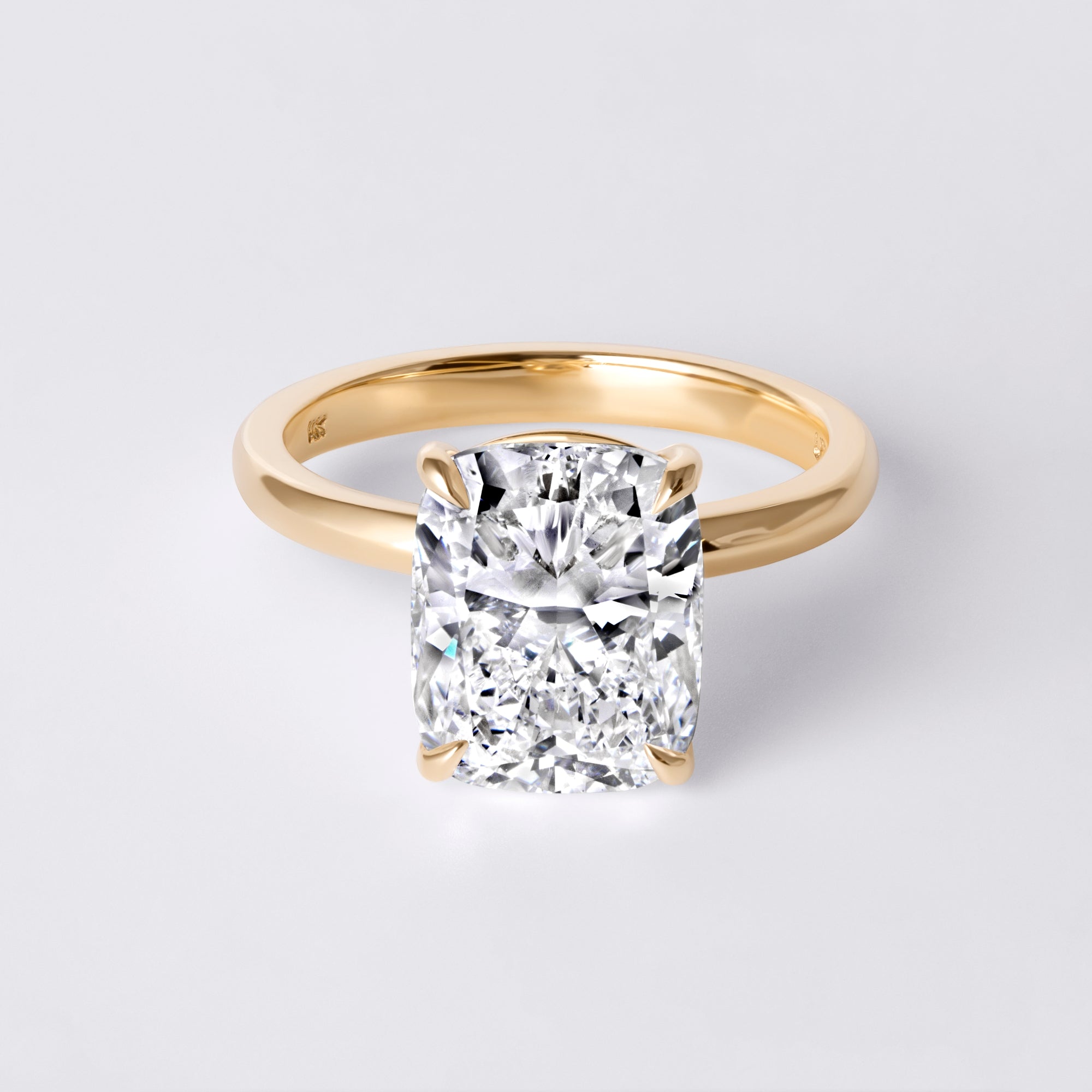
Two diamonds with the same carat weight can appear entirely different in size. That’s because cut quality, shape, and weight distribution all influence how a diamond presents when worn. A well-cut diamond reflects more light, feels larger, and offers far more brilliance - regardless of its weight.
A higher carat doesn’t always mean a better diamond. In fact, a smaller carat with an exceptional cut can outshine a larger stone with inferior proportions. That’s why most loose diamonds - and most GRWN engagement rings - are thoughtfully designed under one carat: where precision, beauty, and balance intersect.
Larger, high-quality diamonds are rare by nature. As much as two-thirds of the original rough can be lost during the cutting process. That rarity is why a single 2-carat stone often carries greater value than two 1-carat stones of the same grade.
Carat & Appearance - What You See Isn’t Always What You Get
When it comes to diamonds, bigger doesn’t always mean brighter.
While carat measures weight, it’s surface area - what you actually see - that defines how a diamond shows up on the hand. And here’s where it gets interesting: as carat weight increases, surface area doesn’t scale equally.
For example:
- A 0.50 carat diamond has a surface area of approximately 5.1mm
- A 1.00 carat diamond has a surface area of 6.5mm
That’s double the weight - but only a 27% increase in visual size.
In other words, small increases in carat can lead to large increases in price, without a dramatic change in appearance.
The difference between a 0.90ct and a 1.00ct? Barely visible. But the value jump? Considerable.
At GRWN, we guide our clients toward what’s seen and felt - not just what’s measured. We design for proportion, presence, and brilliance, so every diamond - no matter the weight - makes a lasting impression.
Carat in Context - The Balance of the 4 Cs
Some diamonds are cut to maximize weight - but often at the expense of brilliance, proportion, and balance.
At GRWN, we approach carat as just one piece of a bigger picture. Cut, clarity, and color all work in harmony to determine a diamond’s overall presence. A larger diamond with poor symmetry or visible inclusions will never shine as brightly as a smaller one cut to perfection.
As diamonds increase in size, inclusions and imperfections become easier to spot. That’s why cut should always be the priority, with clarity and color considered more closely as carat weight rises.
Here’s how we recommend thinking about carat in relation to the other Cs:
Carat vs. Karat - A Matter of Weight vs. Purity
Though they sound the same, carat and karat refer to two entirely different things in fine jewelry.
- A carat (ct) measures the weight of a diamond - 200 milligrams, to be exact.
- A karat (K), on the other hand, refers to the purity of gold. For example, 24K is pure gold, while 14K gold is 58.3% gold mixed with other metals for strength and durability.
In the U.S., the terms are distinct. But in the UK and parts of Europe, “carat” is often used for both, which can lead to confusion.
When you’re shopping for a diamond ring, you’ll see both terms at play.
A 1ct diamond in 14K gold means the diamond weighs one carat, and the setting is made of 14-karat gold.